Now that the Effective Teacher Assessments are complete we can move on to more meaningful work in public education. You know what I am referring to, field tests item tryouts. The students at my school were blessed with the opportunity to "try out" the fourth grade math questions and the third grade writing assessment.
The fourth grade assessment seems pretty straightforward. The exception, compared to previous years, is the number of questions. Normally the testing company will add ten questions on the regular test. This time, since it is a separate test from a different company, there are more than twenty questions. No big deal, right? Wrong!
We are required to treat this just like the regular assessment. This means we need a moderator for every administrator of the test. During testing we have to completely turn our schedule on its ear every day of testing. Just to break down the schedule for you, it takes third graders four days complete their two assessments. The same applies to fourth grade. That is already eight days of interrupted schedules. Add on these additional item tryout days and we have ten days. This doesn't include the small groups and make up tests for students that may have missed their regular test day. In addition to all of these tests, we are required to assess our English Language Learners each year. This impacts at least another 15-20% of our students because they speak a language other than English at home.
That is not the real reason for this post. I really want to share with you the absurdity of the writing portion of the item tryouts for third grade. As I said before, our students were blessed with the opportunity to "try out" the writing assessment.
I have not seen the actual assessment, but as a potential test administrator I have read the Instructions for Administering the Writing Assessment. Below are some of the highlights.
First thing that stands out is that the writing assessment does not allow for the passage to be read to the student. I can understand this rule for the reading assessment, but for the writing? Now I am a realist and I know that if a student struggles with reading then their writing typically suffers, too. What also stands out is the fact that they can't use highlighters. Why? I am assuming it is because they are using a scorable booklet and they are afraid of bleed through. The only other reason I can think of would be that they want to decrease the likelihood that the students will be successful. In the real world, when we see important information we highlight, underline or mark it in some way to show that we think it is important. These "rigorous" tests are supposed to better prepare our students for the real world. If that is true, why not let them work like they would in the real world? This is just a minor issue compared to the next part of the instructions.
The review questions are actually decent questions. One that caught my eye was this one:
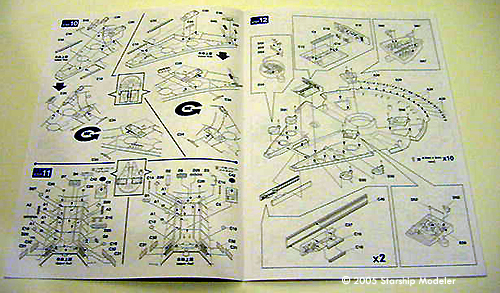
Another unbelievable part of this is the fact that the instructions that must be read word for word to students is three pages long. Three pages of instructions for one writing prompt. I think my model of the Millennium Falcon.
I want each of you reading this to understand exactly what I am saying. I don't have a problem with tests & assessments. I think they are great when used appropriately. Our current & what looks like future state assessments are far from appropriate. This writing assessment is not developmentally appropriate and expects third graders to do what is not a legitimate expectation for a nine year old. Our current assessments are being used (or plan to be used) to evaluate teachers and assess the reading level of students. I won't go into detail on those because there is a plethora of posts by more articulate writers than myself out there on the topic. Yes, I do know what a plethora is.
If things continue as the current course indicates, we will have more inappropriate assessments for our students to muddle through and inaccurate teacher evaluations because of value added modeling. The only way it will change is if all the voting parents out there contact their representatives to voice their opinions on such harmful practices.
The fourth grade assessment seems pretty straightforward. The exception, compared to previous years, is the number of questions. Normally the testing company will add ten questions on the regular test. This time, since it is a separate test from a different company, there are more than twenty questions. No big deal, right? Wrong!
We are required to treat this just like the regular assessment. This means we need a moderator for every administrator of the test. During testing we have to completely turn our schedule on its ear every day of testing. Just to break down the schedule for you, it takes third graders four days complete their two assessments. The same applies to fourth grade. That is already eight days of interrupted schedules. Add on these additional item tryout days and we have ten days. This doesn't include the small groups and make up tests for students that may have missed their regular test day. In addition to all of these tests, we are required to assess our English Language Learners each year. This impacts at least another 15-20% of our students because they speak a language other than English at home.
That is not the real reason for this post. I really want to share with you the absurdity of the writing portion of the item tryouts for third grade. As I said before, our students were blessed with the opportunity to "try out" the writing assessment.
I have not seen the actual assessment, but as a potential test administrator I have read the Instructions for Administering the Writing Assessment. Below are some of the highlights.
THERE IS NO READ-ALOUD ACCOMMODATION FOR THE WRITING ITEM TRYOUT. ALL STUDENTS MUST READ THE PASSAGES INDEPENDENTLY. THE USE OF HIGHLIGHTERS AND SCRATCH PAPER IS NOT ALLOWED.
First thing that stands out is that the writing assessment does not allow for the passage to be read to the student. I can understand this rule for the reading assessment, but for the writing? Now I am a realist and I know that if a student struggles with reading then their writing typically suffers, too. What also stands out is the fact that they can't use highlighters. Why? I am assuming it is because they are using a scorable booklet and they are afraid of bleed through. The only other reason I can think of would be that they want to decrease the likelihood that the students will be successful. In the real world, when we see important information we highlight, underline or mark it in some way to show that we think it is important. These "rigorous" tests are supposed to better prepare our students for the real world. If that is true, why not let them work like they would in the real world? This is just a minor issue compared to the next part of the instructions.
For this test, you will read one or two selections and then be asked to write an essay on a topic that relates to the selections(s). The test is not timed but will probably take about 60-90 minutes to finish.You read that correctly. Third graders are expected to write for 60-90 minutes. When I took my certification exams for elementary & secondary principal I did not spend this much time on a single response. There is much debate about the attention span of a typical nine year old third grader. To maximize attention span the child needs to be interested in what they are doing. When a third grader is interested and focused on what they are learning/doing the best that you could expect from them is 35 minutes and it could drop as low as 10 minutes. Yet these students are expected to write for 60-90 minutes. Not only are they expected to write that long, but then there is this piece of information in the instructions:
Your writing will be scored on how fully you develop the topic and on how well you organize and express your ideas. As you work, keep in mind these three stages of the writing process: Planning...Writing...Editing/Revising.My daughter is finishing first grade and is a fairly successful student. She can sit and work for twenty minutes on a project with little struggle. Beyond that and you can expect very little out of her. She likes to write and in fact has already started writing books. Each book is about five pages long, one to two sentences per page complete with illustrations. How is it appropriate that in two years time she will be expected to go from writing five to ten sentences that are limited in length to completing an essay over the course of a 60-90 minute span when her attention span will not have increased more than another ten minutes? The great thing about it is the assessment comes with a checklist for the writer to review after finishing their work.
The review questions are actually decent questions. One that caught my eye was this one:
Do I explain or support my ideas with enough details, using information from the selection(s) as well as other experiences or events?Keep in mind they were told in the instructions that they couldn't highlight in the assessment book, but are required to include information from the selections. A little counterintuitive don't you think?
Another unbelievable part of this is the fact that the instructions that must be read word for word to students is three pages long. Three pages of instructions for one writing prompt. I think my model of the Millennium Falcon.
Image source: Starshipmodeling.com
My favorite questions on the "Writer's Checklist" are:
Will the reader be able to read my handwriting?
Is my spelling correct throughout the writing?If I saw those questions on a checklist as a third grade boy, I probably would have shut down. In fact my third grade teacher still gives me a hard time about my penmanship (thanks Mrs. Bilyeu).
I want each of you reading this to understand exactly what I am saying. I don't have a problem with tests & assessments. I think they are great when used appropriately. Our current & what looks like future state assessments are far from appropriate. This writing assessment is not developmentally appropriate and expects third graders to do what is not a legitimate expectation for a nine year old. Our current assessments are being used (or plan to be used) to evaluate teachers and assess the reading level of students. I won't go into detail on those because there is a plethora of posts by more articulate writers than myself out there on the topic. Yes, I do know what a plethora is.
If things continue as the current course indicates, we will have more inappropriate assessments for our students to muddle through and inaccurate teacher evaluations because of value added modeling. The only way it will change is if all the voting parents out there contact their representatives to voice their opinions on such harmful practices.

Comments
Post a Comment